

The Original Snake Oil
If you walked into a pharmacy or visited a resort in 1880, you might have been handed a glass of water that smelled distinctly like rotten eggs and tasted like rusty nails. The salesman wouldn’t apologize for the flavor either. It was actually part of the package! He would tell you that the foul taste was proof it was working. You’re feeling much better now, right?
Welcome to the golden age of the Mineral Water Craze, a bizarre time in history where odd smelling springs were treated like liquid gold, and entrepreneurs convinced the public that drinking underground runoff could cure any known ailment.
Stink is the Secret: If it Smells Bad, It Must Be Good
The logic of the era was slightly backwards: if medicine didn't make you gag, it wasn't strong enough.
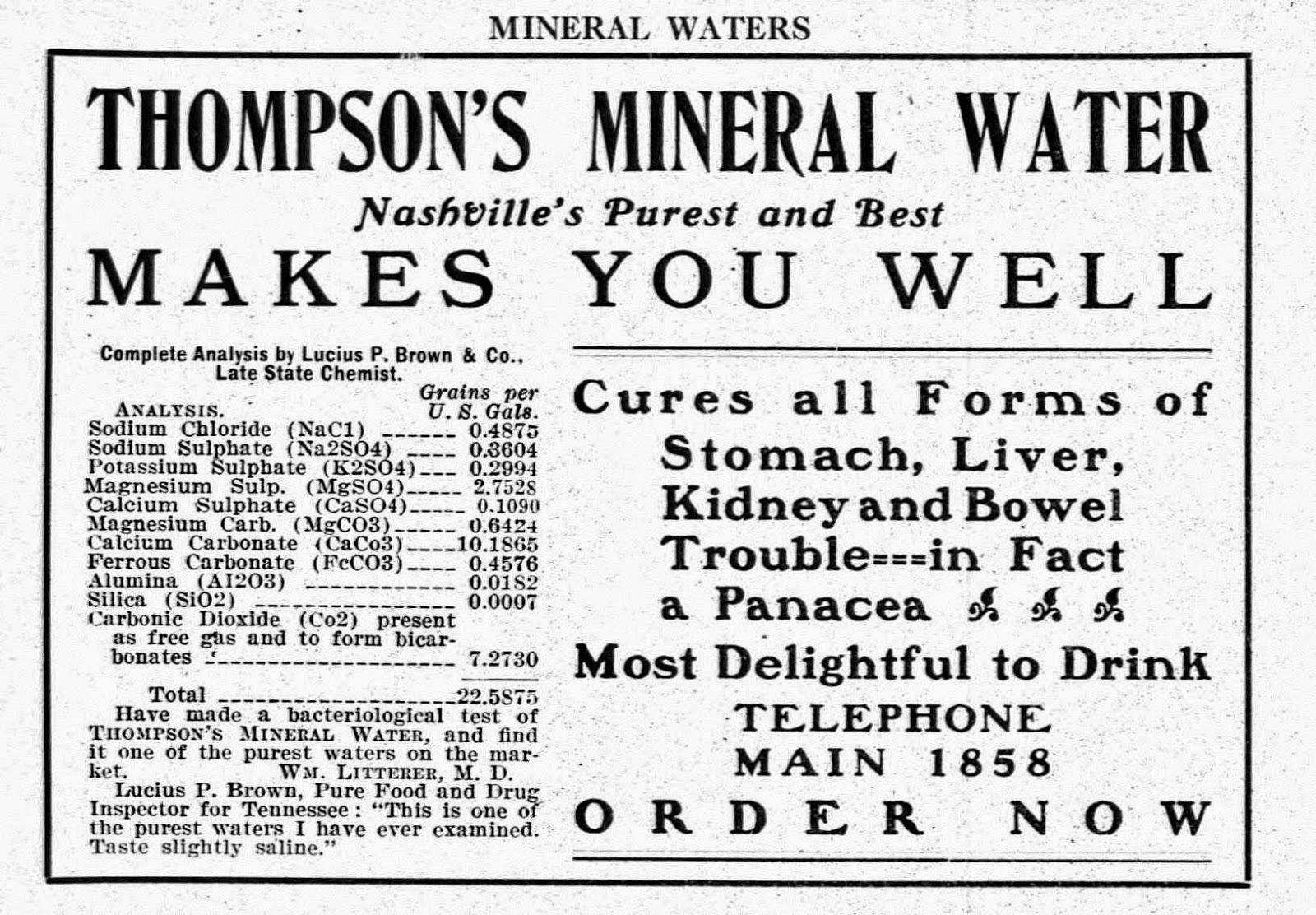
Springs high in sulphur, lithium, magnesium, and iron became hotspots and hubs for business. Promoters relied on a mix of bad science and aggressive marketing to sell their specific wells.
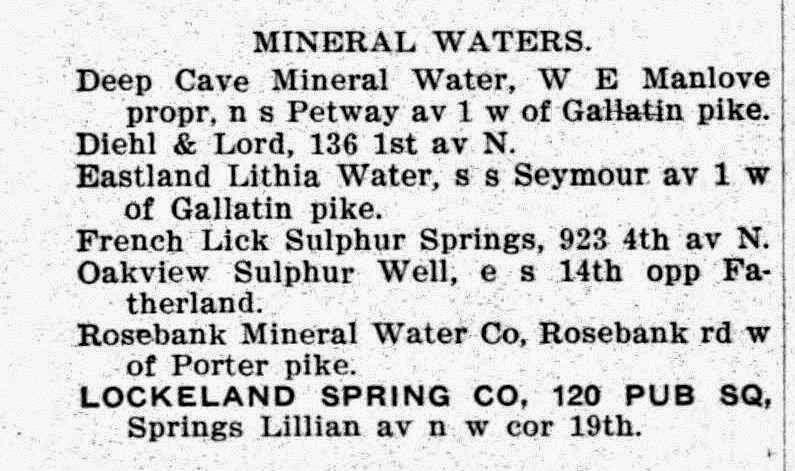
Sulphur springs (like Nashville's historic French Lick wells) were marketed as blood purifiers, kidney cleansers, and a hangover cure. Lithium-infused waters, like the famous Lithia waters of Georgia and Wisconsin, were sold as “soothing” brain tonics capable of curing “shattered nerves,” depression, and fits of anger. If a well had enough minerals to stain the rocks orange, it could be branded as an anti-aging elixir.
Nashville's Own Fountain of Wellness
Long before permanent settlement, Native American tribes and early pioneers frequented the natural salt and sulfur licks along the Cumberland River in an area known as "Sulphur Spring Bottom" (which later became the famous Sulphur Dell).
By the 1800s, the water had caught the attention of scientists. In 1841, Tennessee State geologist Dr. Gerard Troost analyzed the spring and claimed its mineral composition rivaled the famous healing waters of Harrogate Springs in England. Naturally, entrepreneurs jumped at the chance to monetize it.
In the late 1800s, a massive 2,900-foot well was drilled near Morgan Park. By 1955, public spigots were set up near the Werthan Industries site on Taylor Street. Nashvillians would line up with jugs, bottles, and tin cups. The pungent, thick water was widely believed to purify the blood, aid kidney function, cure hangovers, and even ward off bad luck. Conveniently, it seemed there was nothing this water couldn’t help with!
The Shift to Public Health Concerns
The decline of Nashville's miracle water wasn't just a change in trend; it demonstrated a growing interest in public health. Relying on untreated springs and shallow wells was a dangerous gamble. Waterborne illnesses like cholera and typhoid were a constant threat to a growing city. Nashville's leaders realized that if the city was going to thrive, it needed reliable, scientific water infrastructure, not folk remedies.
Instead of waiting in line with a glass jug on Taylor Street, Nashvillians now enjoy clean, safe, and award-winning tap water at the turn of a faucet. Across Metro Water’s facilities, we deliver approximately 109 million gallons of water a day through over 3,100 miles of water main. And, thankfully, you don't have to hold your nose to drink it. The next time you turn on your tap, you can skip the sulfur and toast to 100+ years of clean, reliable public infrastructure! It might not grant you eternal youth, but it is guaranteed to be a much safer bet.
Legal Disclaimer:
EIN Presswire provides this news content "as is" without warranty of any kind. We do not accept any responsibility or liability for the accuracy, content, images, videos, licenses, completeness, legality, or reliability of the information contained in this article. If you have any complaints or copyright issues related to this article, kindly contact the author above.
