

Insulation4Less Publishes Expanded Guide to Quonset Hut Insulation, Condensation Control and Energy Efficiency

Closed cell foam of Prodex Total Insulation
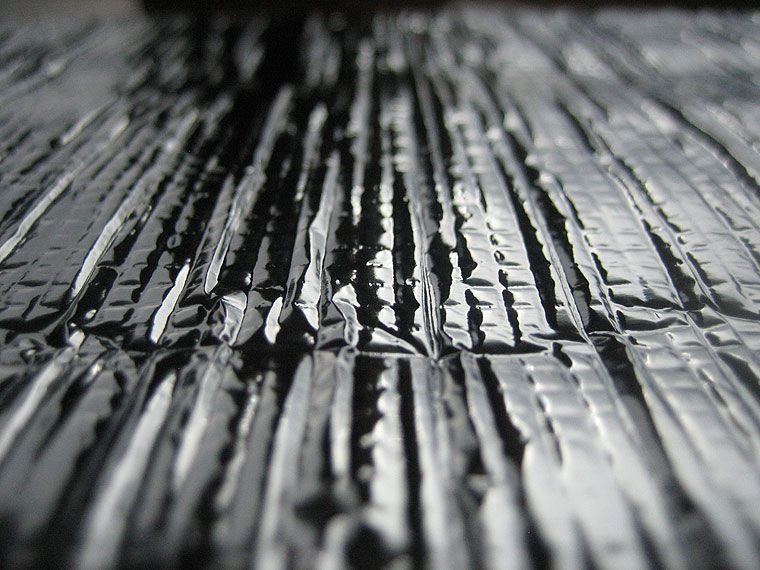
Foil on Prodex Total Insulation
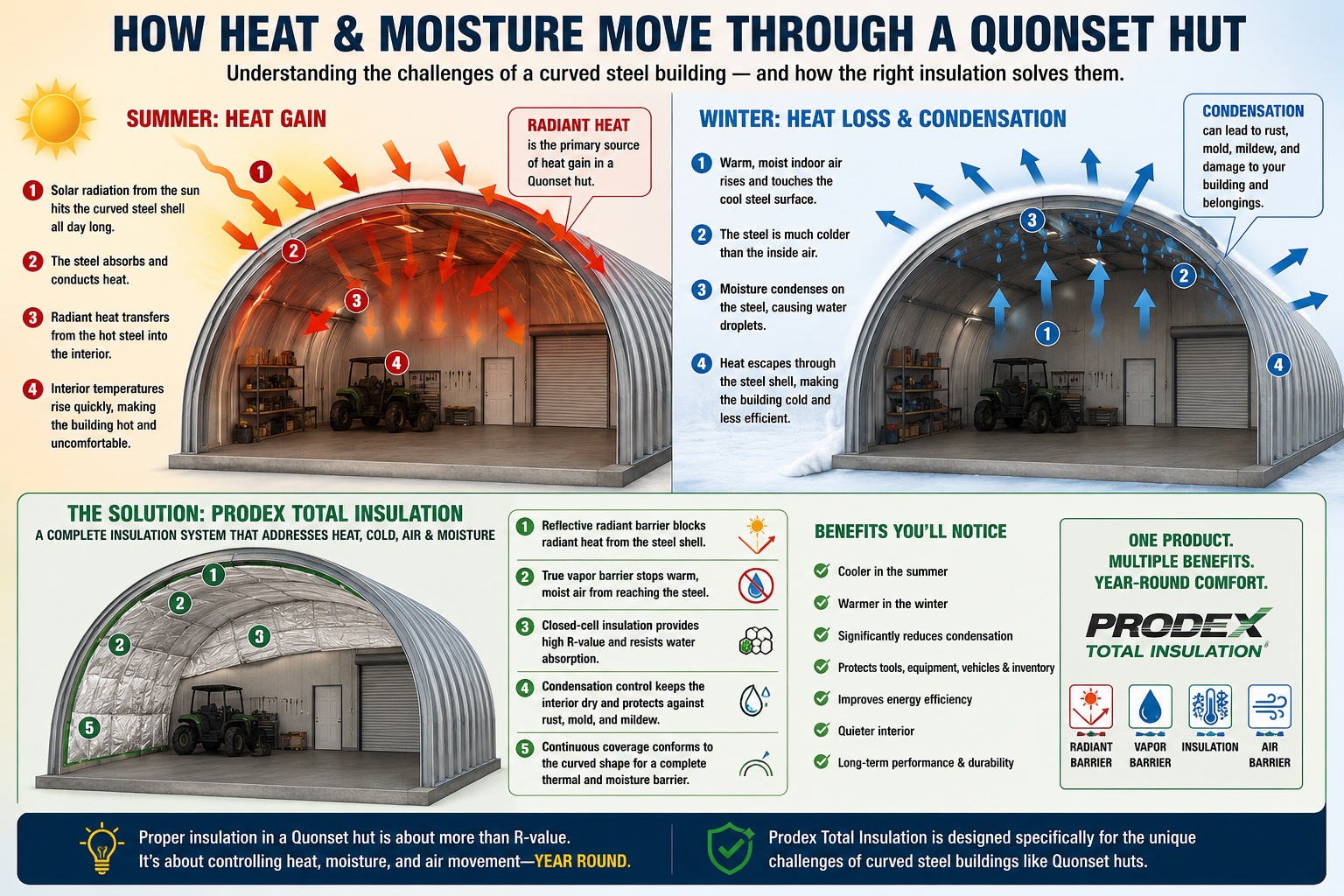
How Heat & Moisture Move Through a Quonset

10M Prodex Total Insulation Plus
New educational resource explains how insulation can address radiant heat, winter heat loss and condensation in the curved steel shells of Quonset hut buildings
HOUSTON, TX, UNITED STATES, August 8, 2026 /EINPresswire.com/ -- Insulation4Less has published an expanded educational guide addressing one of the distinctive challenges of insulating steel structures: controlling heat and moisture across the continuous curved surface of a Quonset hut.
Unlike conventional buildings with clearly separated walls and roofs, a Quonset hut typically uses a curved steel shell that forms both. That design provides structural simplicity and usable interior space, but it also creates insulation challenges because a large portion of the building envelope is directly exposed to changing outdoor conditions.
The updated quonset hut insulation guide examines how building owners can approach insulation in both new and existing Quonset structures, with particular attention to radiant heat, condensation, air movement and winter heat loss.
## Why Quonset Huts Present Different Insulation Challenges
Steel readily responds to changes in outdoor temperature. Under direct sunlight, the curved metal shell can absorb substantial solar energy and radiate heat toward the building interior. During colder conditions, the same steel surface can contribute to rapid heat loss.
Moisture presents another concern. When warm, humid interior air encounters sufficiently cold steel, condensation can form on the inside surface. Depending on conditions, that moisture may drip into the building or contribute to problems affecting stored materials, equipment and metal surfaces.
These issues are not unique to Quonset huts. They are also important considerations when selecting metal building insulation for other steel structures.
The Roof Is a Critical Part of the Building Envelope
Roof insulation is particularly important in metal structures because the roof receives direct solar exposure and can represent a substantial surface for both heat transfer and condensation.
In a Quonset hut, however, the distinction between roof and wall becomes less obvious. The curved shell transitions continuously from the upper roof area toward the sides of the building. An insulation strategy therefore needs to consider the entire steel envelope rather than treating the roof and walls as completely independent surfaces.
Insulation systems used in these structures may need to perform several functions, including reducing conductive heat transfer, limiting radiant heat, controlling air movement and helping manage water vapor and condensation.
Similar Principles Apply to Warehouses and Other Large Steel Buildings
The underlying building-science principles extend beyond Quonset construction.
Large warehouses frequently have extensive metal roof and wall areas exposed to the same cycles of solar heating, nighttime cooling and seasonal temperature changes. A separate Insulation4Less resource on warehouse insulation examines insulation materials and approaches for managing heat, cold and moisture in these larger commercial and storage environments.
The appropriate insulation system ultimately depends on factors including the building's construction, climate, intended use, existing insulation and whether the project involves new construction or a retrofit.
## Understanding Insulation as a System
The expanded Quonset hut guide encourages building owners to look beyond a single insulation measurement when evaluating their options.
Thermal resistance is important, but metal buildings may also require consideration of radiant heat, vapor movement, air infiltration and condensation. Installation details—including seams, penetrations and the relationship between the insulation and steel shell—can also affect overall performance.
The guide covers insulation selection and installation considerations for curved steel buildings while explaining why condensation and radiant heat require particular attention.
The complete Quonset hut insulation guide is available from Insulation4Less.
## About Insulation4Less
Insulation4Less provides insulation products and educational resources for residential, agricultural, commercial and metal-building applications. Its online guides cover insulation selection, installation, condensation control, radiant heat and related building-envelope considerations.
**Media Contact:**
Insulation4Less
[www.insulation4less.com](http://www.insulation4less.com)
Jonathan Barber
Insulation4Less.com Inc
+1 281-356-0798
email us here
Visit us on social media:
Facebook
YouTube
X
Legal Disclaimer:
EIN Presswire provides this news content "as is" without warranty of any kind. We do not accept any responsibility or liability for the accuracy, content, images, videos, licenses, completeness, legality, or reliability of the information contained in this article. If you have any complaints or copyright issues related to this article, kindly contact the author above.
